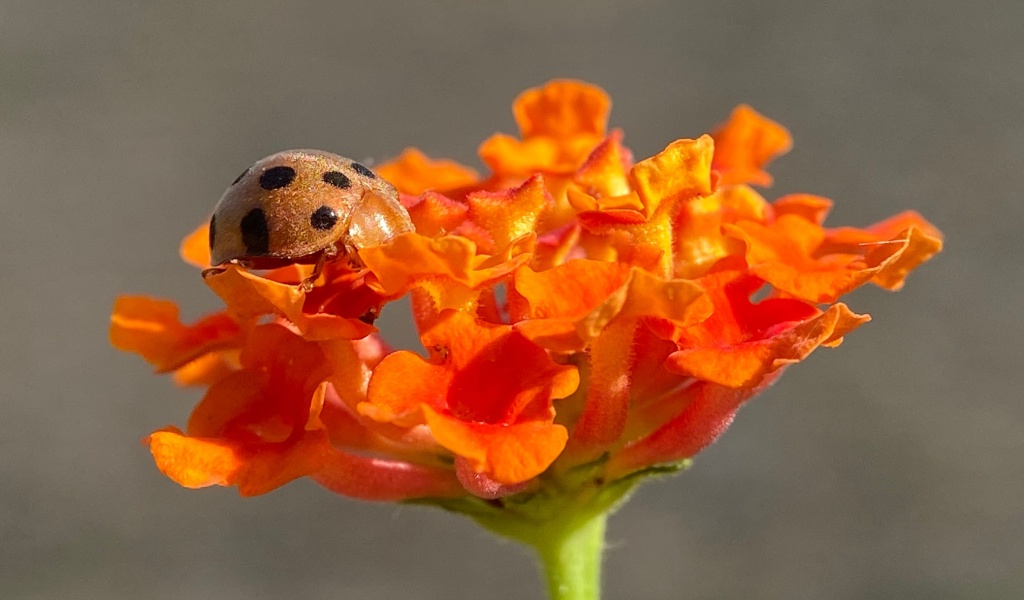
Ladybugs, or lady beetles, are fascinating creatures. They are beloved by many because they are beneficial predators that cheerfully chomp on garden pests. There are approximately 5,000 species of these tiny insects, and most of them are pretty valuable. Although they are typically known for their standard red body with black spots, ladybugs also come in a variety of colours – some even have stripes or no markings at all! It may seem scary to see a bug at home, but these little critters are harmless to humans and very helpful to gardeners.

As much as it may seem to be a bug because of the name it carries, ladybugs are not bugs at all! Let’s dig into a bit of history: Ladybugs were called ladybirds 500 years ago by the Europeans. However, the Americans preferred calling them ladybugs for their own reasons. Scientists, on the other hand, are always precise and accurate, even in naming things, preferring to call them lady beetles. Did you notice that although the second name differed, no one disputed the first name? Curious to know more? Then this article is for you. For a deeper understanding and interesting facts about this lovable creature, keep reading.
Ladybugs Eat More Than Just Aphids
Are you aware that ladybugs eat more than 50 different species of aphids and can consume more than 500 aphids a day? The beetles also eat other pest insects, including mites, flies, and scale insects. As part of their complete diet, ladybugs also require pollen; their favourites include plants like dill, cilantro, wild carrots, dandelions, and scented geraniums. Different species of ladybugs have different food preferences. While many prey on garden pests, some, like the Mexican bean beetle and the squash beetle, feed on plants and are considered unwelcome pests themselves.
Red With Black Spots Isn’t the Only Type
Although most people associate ladybugs with a red body and black spots, not all species exhibit this characteristic. There are about 5,000 species of ladybugs in the world, including 450 in North America. In addition to red, they can also be yellow, orange, brown, pink, or even all black. Their spots, which some ladybugs don’t have at all, can also appear as stripes.
Another fascinating fact is that the spots and bright colours on ladybugs are not for looks alone; they are meant to warn would-be attackers that this beetle tastes terrible. Beyond their warning colours, ladybugs have another line of defence: they emit foul-smelling blood from their leg joints when startled. This yellow liquid is toxic to many predators, such as birds and small mammals. When all else fails, ladybugs are known to play dead, giving them a third defence mechanism in a world of eat-or-be-eaten.
Thanks to all these protections, they are not frequently preyed upon. However, some insect species, such as assassin bugs, stink bugs, and spiders, do eat ladybugs.
Virgin Mary to the Rescue
Long ago, farmers’ crops were being damaged by swarms of aphids. This infestation caused tremendous losses, so the farmers sought help and hope from the Virgin Mary.
Soon after, ladybugs arrived, ate the aphids, and saved the day. The farmers were so grateful that from then on, they referred to the insects as ‘Our Lady’s beetles.’ And from then on, the first name stuck, even when the second varied in different species. In Germany, these insects go by the name Marienkafer, which means ‘Mary beetles.’ The seven-spotted lady beetle is believed to be named after the Virgin Mary. The red colour is said to represent her cloak, and the black spots her seven sorrows.
Ladybugs Live for About a Year
These insects are short-lived. Their lifecycle begins when a batch of bright-yellow eggs is laid on branches near food sources. They hatch as larvae in four to ten days and then spend about three weeks feeding. The earliest arrivals may even eat some of the unhatched eggs. Once they are well-fed, they begin to build a pupa, and after seven to ten days, they emerge as adults. Ladybugs typically live for about a year.
They Have Hidden Wings
Much like butterflies, ladybugs go through four stages before completing their metamorphosis. They begin as tiny eggs that hatch into larvae resembling tiny spiny alligators. Then they enter the pupal stage, which lasts around two weeks. In their final phase, they become adult ladybugs, and their hidden wings appear.
Adult ladybugs have a recognizable smooth dome shape and an outer shell, or elytra, that protects their forewings. Underneath the outer shell is a pair of thin hind wings that unfold at a speed of 0.1 seconds and are significantly larger than the ladybug’s body. Once unfolded, ladybug wings move at a rate of 85 beats per second.
Ladybirds Have Travelled to Space
You may not have travelled to space yet, but these tiny ladybirds have had the privilege. You might wonder how. In 1999, four ladybirds named John, Paul, Ringo, and George, after The Beatles, were sent into space! The four lucky bugs were taken along with their favourite snack, aphids, so that scientists could observe how predators and their prey would interact in zero gravity. The experiment was a success, as the results showed that the ladybirds were still able to catch and eat the aphids in space, even without gravity to assist them in pouncing or climbing.
Now that you know more about these fascinating crawlers, we hope you can appreciate them and the role they play in the planet’s ecosystem!