
Rucking is the newest exercise trend to take the internet by storm. But it’s not just a fad. Rucking not only supports your weight-loss journey but also strengthens your muscles and bones. If this is the first time you’re hearing about rucking, then buckle up – this one simple trick is going to change the way you see exercise and weight loss!

What Is Rucking?
As much as it sounds unfamiliar to you, rucking is not a new trend at all. It has its roots in military fitness, where soldiers use their rucksacks as training implements. For soldiers, one of the requirements to earn an Expert Infantryman Badge, for instance, is to complete a 12-mile ‘ruck march’ within three hours, while carrying 35 pounds.
A rucksack with handles on all sides can also be used as a weight in traditional calisthenics-inspired training. It can be used for exercises like clean and presses, walking lunges, rows, and curls.
Now, it seems absurd to walk and train like a soldier, so for people like us who are outside the military, rucking is similar to traditional backpacking. Carrying a weighted backpack or strapping on a weighted vest while on a 30-minute walk or hike is an easy way to increase calorie burn. Additionally, according to some experts, this is said to have cardiovascular, muscle-building, and bone-health benefits.
Rucking was initially used to train soldiers to be prepared for real-world scenarios in which they must carry heavy loads over long distances for prolonged periods.
Rucking Focuses on Three Main Steps:
-
Rucksack or backpack
-
Weights or any heavy items
-
Your time!
Just three non-expensive and straightforward steps to get you started. Now here’s the thing: just because you’re starting something fancy for weight loss doesn’t mean you need to splurge on anything too expensive. Simply adding some weights, like cans and tins, to your backpack is sufficient to give you the right amount of load to carry.
Let’s Explore the Three Gears
Firstly, don’t overload your backpack, even if you regularly strength-train. Lifting weights at the gym isn’t the same as carrying 20 pounds on your back for several miles, so start small to reach greater benefits.
Next, maintain an upright posture with your shoulders back. Be mindful of how you move – if you’re hunched forward, it will change your posture and bend your spine. It’s also important to choose a pace that is comfortable but pushes you a little forward.
And lastly, gradually increase your workouts. Use a fitness tracker to monitor your pace, distance, duration, and weight load so you know it’s safe to push yourself. However, you must choose one of these strategies:
-
Increase weights from 5 pounds in the first week to 5.5 pounds in the next week or
-
Walk for 30 minutes the first week and then 35 minutes the following week.
Increasing frequency and intensity simultaneously can lead to injuries and setbacks, so be cautious not to overdo it. Taking time to rest and recover is just as important as challenging your body in different ways.
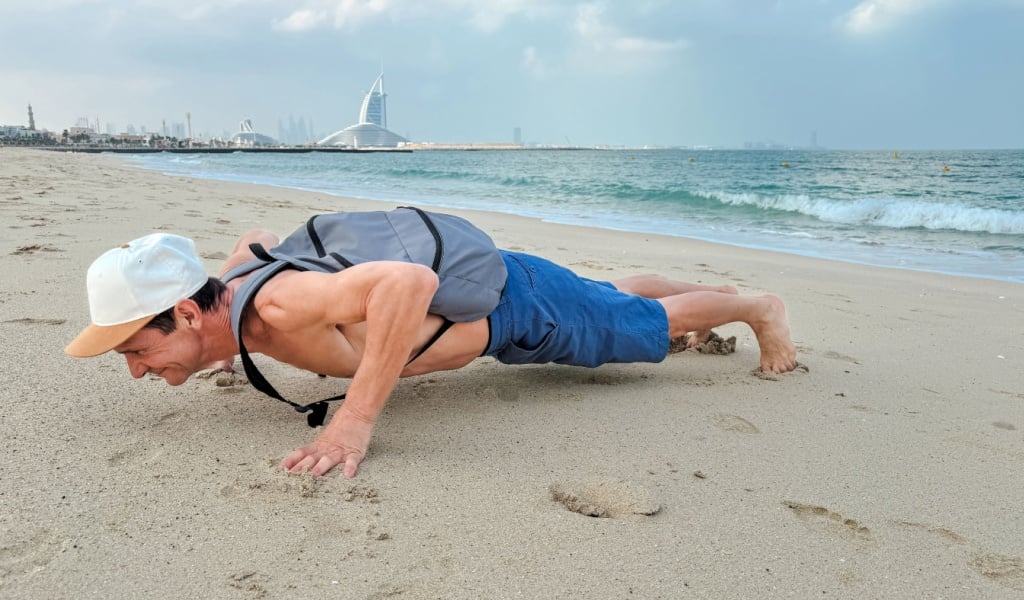
Benefits of Rucking
Burns More Calories
Burning more calories is the ultimate goal for anyone wanting to lose weight, and rucking delivers that. With the right amount of weight, a good walking posture, and enough time, rucking can burn approximately 30% more calories than walking at the same speed. This provides a clear, measurable benefit for those looking to enhance their workout routine.
Boosts Mental Health
Rucking can enhance your mental health because it’s a form of exercise that naturally improves your mood. Physical activity, such as rucking, releases endorphins and increases serotonin levels, acting as natural mood enhancers. You also gain an additional boost from being outside, as rucking is traditionally an outdoor activity. Research on ‘green exercise’ suggests that spending time in nature lowers stress levels, blood pressure, and the risk for mood disorders like depression. And while rucking can be a solo activity, rucking with friends or as part of a rucking club can also lift your spirits and help build a community.
Helps Build Muscle
Rucking or weighted step exercises improve leg muscle strength, power, and mobility. These benefits have been proven by a study of participants aged 65 to 74.
Easy And Safe Workout
Rucking is generally safe and effective for people of all ages and fitness levels. It is advisable to talk to a general healthcare provider before starting any new fitness routine.
Can You Go Rucking On A Treadmill?
Yes, rucking can be done on a treadmill. However, try to reserve this option for bad weather or winter, as rucking outdoors is still ideal because exposure to nature helps boost your mental health.
In Summary
Rucking is a cool trend to implement for weight loss and muscle training. When done with care, at the proper weight, and with appropriate precautions, it offers numerous benefits. However, if you ever have knee pain, back pain, or any other unusual signs, it is advisable to take a step back.
Now that you know the benefits of rucking, what are you waiting for? Kick-start and see how you can progress in your weight loss journey!