
Imagine sailing across the ocean and coming across an island made entirely of plastic bottles, bags, fishing nets, and other trash. While the Great Pacific Garbage Patch (GPGP) is not a solid floating island as many people imagine, it is the largest accumulation of marine debris on Earth and continues to grow.
Hidden in the North Pacific Ocean, this enormous collection of plastic waste has become one of the biggest environmental challenges of our time. As a result, millions of tons of plastic circulate through the area, threatening marine life, ecosystems, and human health.
So, what exactly is the Great Pacific Garbage Patch, and how did it form? Here’s everything you need to know.
What Is the Great Pacific Garbage Patch?
The Great Pacific Garbage Patch is a massive accumulation of floating marine debris located in the North Pacific Ocean, roughly between California and Hawaii. Rather than one giant pile of garbage, it is a vast region where ocean currents have trapped enormous amounts of plastic and other human-made waste.
Scientists estimate that the patch contains approximately:
- 1.8 trillion pieces of plastic
- Around 80,000 metric tonnes of debris
- Covers roughly 1.6 million square kilometers (620,000 square miles)
To put that into perspective, it is about twice the size of Texas or roughly three times the size of France. Most of the debris is plastic because it does not easily biodegrade, so it slowly breaks down into smaller and smaller pieces called microplastics.
Where Is The Great Pacific Garbage Patch?
The Great Pacific Garbage Patch lies within the North Pacific Subtropical Gyre, a giant circular system of ocean currents. It includes two main areas: the Western Garbage Patch near Japan and the Eastern Garbage Patch between Hawaii and California. Together, these regions form the largest known accumulation of marine plastic on Earth.
How Did The Great Pacific Garbage Patch Form?
The garbage patch did not appear overnight. Instead, plastic waste from around the world has entered rivers, coastlines, and oceans for decades, and once in the sea, ocean currents carry the debris across vast distances.
Because plastic is lightweight and durable, much of it floats for years or even decades before becoming trapped in the gyre. Meanwhile, millions of tonnes of additional plastic enter the world’s oceans every year, compounding the problem.
Why Doesn’t the Garbage Wash Ashore?
Many people wonder why this waste does not simply drift onto beaches. The answer lies in ocean currents: the rotating gyre continually circulates water inward, trapping floating debris in the middle. Unlike rivers that carry water in one direction, these circular currents create a kind of ‘plastic trap.’ Some debris eventually escapes, but much of it remains circulating for years.
Is The Great Pacific Garbage Patch Really an Island of Trash?
One of the biggest misconceptions is that the Great Pacific Garbage Patch is a giant floating island that you could walk on. In reality, it is not. Instead, the debris is spread across an enormous area.
Much of it consists of tiny plastic fragments, floating fishing gear, or microplastics suspended beneath the surface. Because the concentration is not high enough to create a solid mass, the plastic is difficult to see in many places.
How Does It Affect Marine Life?
Animals Become Entangled
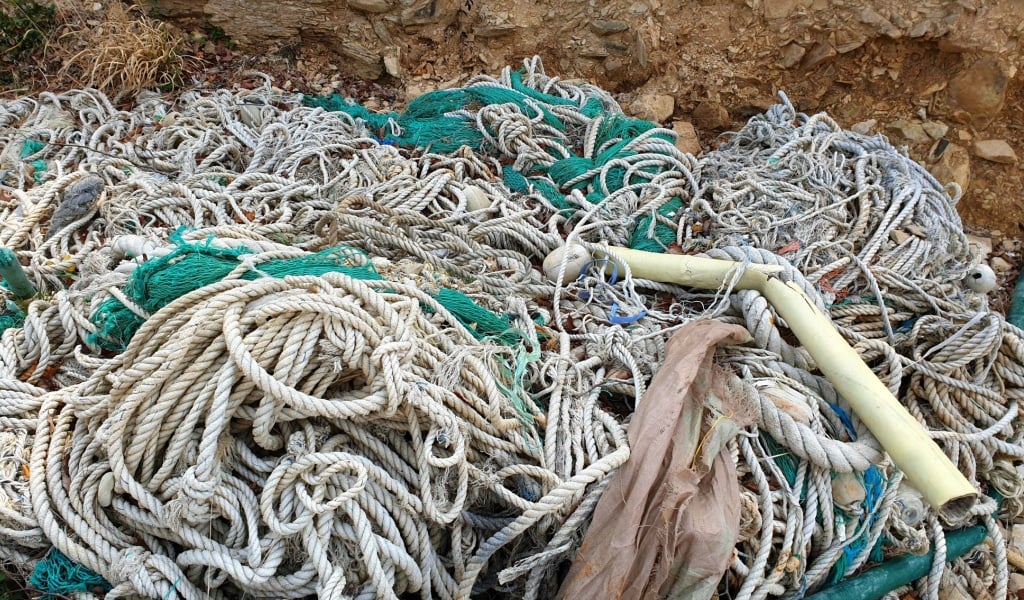
Sea turtles, whales, dolphins, seals, and seabirds often become trapped in fishing nets and plastic straps. This can lead to injuries, starvation, infections, or drowning.
Animals and Coral Reefs Suffer
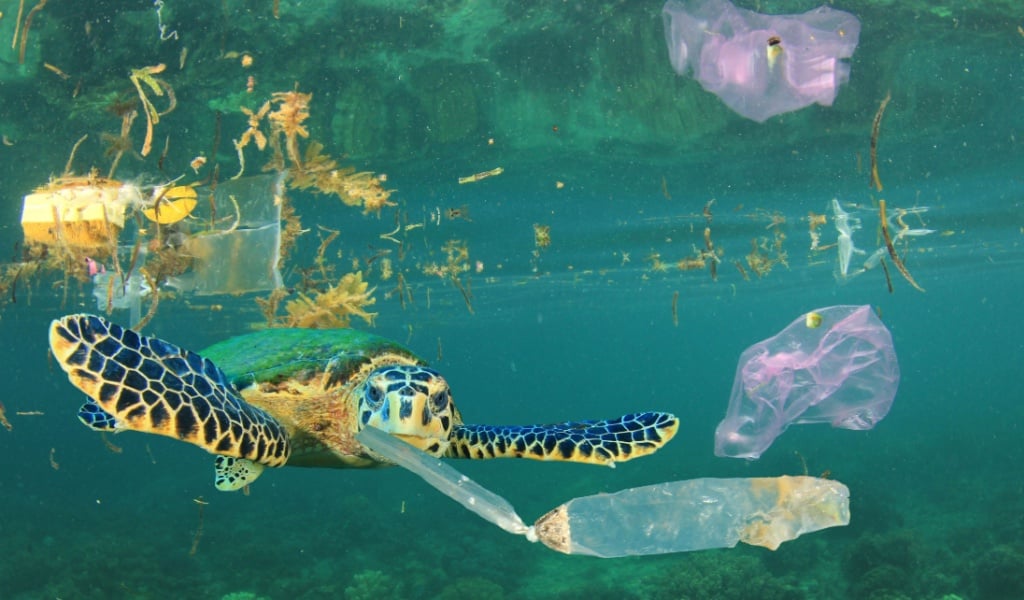
Many marine animals mistake floating plastic for prey. For example, sea turtles may mistake plastic bags for jellyfish and consume them, leading to serious health problems. Plastic debris can also smother coral reefs, block sunlight, and introduce harmful bacteria, increasing the risk of disease.
Did You Know That Plastic Can Enter the Human Food Chain?
When fish, shellfish, and other marine organisms consume microplastics, those particles and sometimes the chemicals attached to them can move through the food web. For instance, researchers have also detected microplastics in seafood, sea salt, drinking water, fruits, and vegetables.
Scientists are still studying the long-term health effects of chronic exposure. Even so, the widespread presence of microplastics shows how deeply plastic pollution has become embedded in our environment.
Why Is Plastic Such a Problem?
Unlike organic materials, plastic is designed to be durable. For example, plastic bags can take 10 to 20 years to break down, while plastic straws can take around 200 years. Even after these periods, plastic usually does not disappear completely; instead, it keeps breaking into smaller fragments.
Additionally, cleaning the patch is extremely difficult because it is enormous and most plastics are tiny pieces. Moreover, how can we keep cleaning when new plastic enters the ocean every day?
The good news is that organizations are working on innovative solutions to address this problem.
Experts agree that preventing plastic from entering the ocean in the first place is far more effective than trying to remove it afterward. Therefore, the focus should be on stopping the problem before it grows.
What Can Individuals Do?
Although the problem is global, individual actions can make a significant difference. That is why small changes matter.
Here are some ways you can help and make a difference:
- Carrying reusable shopping bags.
- Using refillable water bottles.
- Recycling correctly according to local guidelines.
- Participating in beach and river clean-ups.
Every piece of plastic kept out of the ocean is one less piece that could harm marine life. Small actions add up, and they matter more than ever.