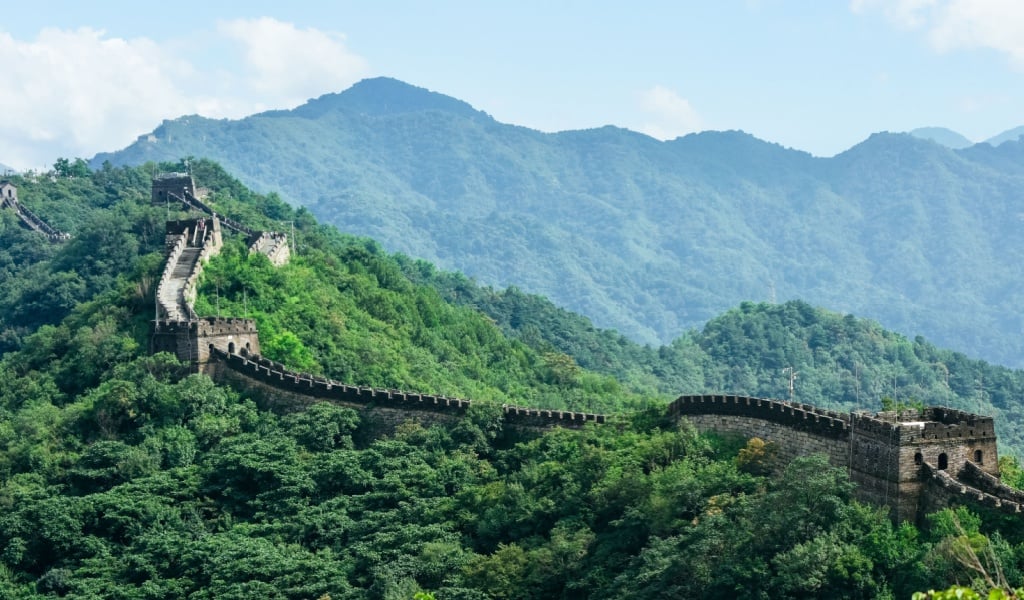
Known as one of the world’s most iconic wonders, the Great Wall of China has captivated people for centuries. Yet many people do not know that China has another stunning wall—one slightly different, built to combat desertification.
The Great Green Wall of China, also known as the Three-North Shelterbelt Forest Program, is a large-scale reforestation initiative created to stop the expansion of deserts. More than that, it is one of the world’s greatest environmental efforts, helping stabilize ecosystems across Northern China. Let’s explore this wonder in more detail.
Origin Of The Great Green Wall
Desertification threatens more than 27% of China’s land, and it can potentially affect millions of people. To respond, China began planting trees across northern China to create a green barrier. The Great Green Wall was initiated in 1978 as a solution to desertification, especially in the Gobi and Taklimakan deserts.
The plan was to plant 88 million acres of trees across 3,000 miles. It is hoped that the program will cover 2,800 miles by 2050. In doing so, the goal is to stabilize shifting sand dunes, restore soil health, and prevent dust storms. Unlike the Great Wall of China, however, this is not a “wall” in the traditional sense; the program uses huge tree belts to block sand and improve agricultural conditions.
Why Desertification Is Becoming A Serious Crisis
Desertification is where fertile land turns into desert through deforestation, drought, and poor land management. Since it affects over 27% of China’s land, it can impact the lives of more than 400 million people. As a result, the Gobi and Taklimakan deserts are expanding at an extremely rapid rate, threatening farmlands, increasing dust storms, and affecting local communities.
These dust storms are not limited to rural areas; they have also reached major cities like Beijing, causing dangerous air pollution. China recognized this challenge early and got to work creating the Great Green Wall.
The Impact Of This Project
The aim of the Great Green Wall was to transform millions of acres of land. As the largest reforestation project in history, it will cover 13 provinces and 1.5 million square miles once completed. Over time, the project has already increased China’s forest coverage from 10% in 1949 to 25% by 2023. In Xinjiang alone, forest coverage increased from 1% to 5% within just 40 years.
The program has also brought immense, tangible benefits for farmers, especially in regions like Gansu, where sandstorms have decreased since its implementation. As a result, crop yields have noticeably improved, stabilizing local economies and communities.
Challenges Of The Great Green Wall Project
While this initiative has indeed been massively successful thus far, it has faced some criticism, too. One primary issue is water usage. Naturally, trees consume large amounts of water, and in dry regions, this can be a challenge because it places a significant strain on limited water resources. In fact, in certain areas, underground aquifers are being drained so much that groundwater levels have dropped significantly.
Another challenge the project poses is the survival rate of the trees planted. Most of these trees are planted in difficult conditions, especially in dry areas with loose sandy soil. Moreover, non-native species such as willows and poplars have posed ecological challenges, as they are not suited to local ecosystems and can disrupt native flora and fauna.
Some people also argue that the Great Green Wall is nothing but a temporary solution, and that the best way to address desertification is to look at its root causes. Critics suggest that examining other factors, such as unsustainable farming and overpopulation, is more effective for long-term success.
Despite these criticisms and challenges, the Great Green Wall has inspired similar initiatives across the globe. One of these is Africa’s Great Green Wall, which draws on China’s experience of creating green belts to combat desertification. For that reason, this initiative must be coupled with scientific research, local community involvement, and the appropriate selection of plant species. Countries facing desertification and climate change can implement this program, which serves as a testament to environmental innovation. More work is needed, but it has the potential to reduce desertification.
Final Thoughts
We only have one Earth to live in, and climate change and desertification pose serious challenges to our planet’s future. Despite criticism, China’s Great Green Wall represents a major effort to fight climate change and desertification. Any initiative faces criticism, but the program’s continued successes show how reforestation can create real change. If China can overcome these challenges, then the Great Green Wall may become a model for global environmental restoration.
This initiative is far more than just planting trees; it is about creating sustainable ecosystems that can adapt to future environmental challenges, too. It stands as a proud testament to how innovation and collaboration can work together to reverse the effects of desertification and protect our planet for generations to come.