In a world obsessed with flashy new climate solutions and expensive green technology, one small Colombian community quietly did something radical years ago. There was no publicity, no international conferences, and no viral hashtags. Instead, a group of idealists gathered in the middle of nowhere, focused on building a sustainable community from scratch in one of the most unlikely places in the world.
Welcome to Gaviotas—a tiny, experimental village in the vast plains of eastern Colombia. For more than 50 years, it has quietly reshaped what sustainable living can look like.
A Cool Concept in a Crazy Place
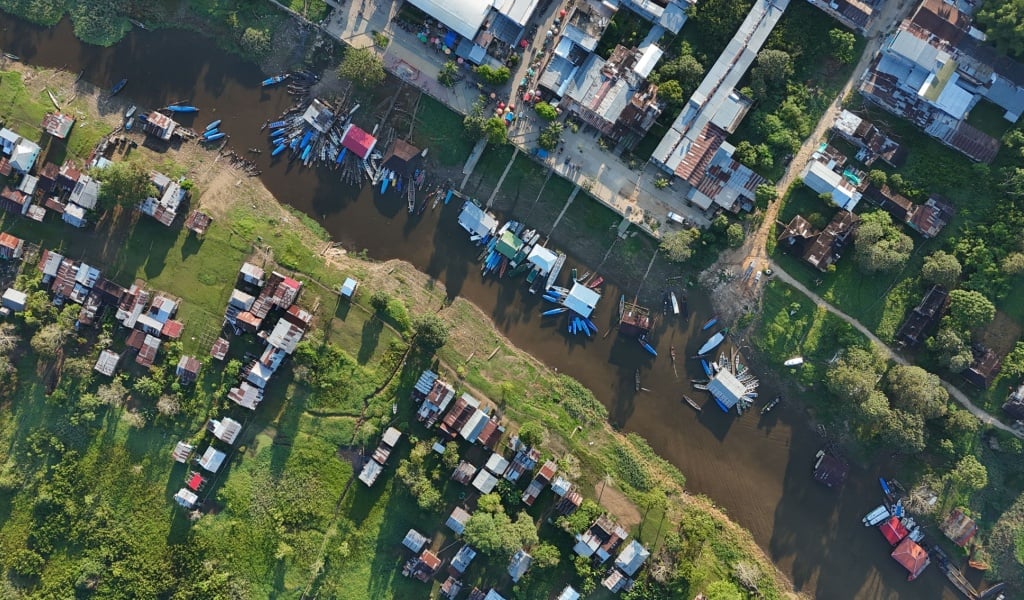
Paolo Lugari, an Italian-Colombian visionary, founded Gaviotas in the Llanos, a distant tropical savanna known for its harsh conditions, back in 1971. Think long dry spells, seasonal floods, intense temperatures, and acidic soils. It’s not exactly prime real estate for an ideal eco-village!
However, that was exactly the point. Lugari thought that a society could flourish anywhere if it could survive in such a harsh environment. He set out to prove his theory by assembling a group of scientists, engineers, and intellectuals to design technologies tailored specifically to the tropics rather than importing solutions from developed nations. This was a living laboratory, not just a settlement.
Creating a Living Forest on Barren Land
Gaviotas’s signature accomplishment is transforming an almost lifeless savanna into a flourishing forest ecosystem.
When the immigrants first arrived, the land was dry, degraded, and nearly unsuitable for farming. So, they did something brave—they planted trees. Millions of trees.
Starting in the 1980s, the community started growing Caribbean pine across large stretches of land. Eventually, this reforestation effort reshaped the environment in astonishing ways:
- Soil quality enhanced.
- Native plant and animal species reappeared.
- An increase in water retention was recorded.
- The local microclimate started to transform.
What was formerly a barren land is now a lush, biodiverse ecosystem supporting hundreds of species. Remarkably, the forest now offers a significant portion of the community’s food and resources.
Redefining Sustainability (Before It Became a Thing)
Long before “sustainability” became popular, Gaviotas was already practicing it in methods that still feel revolutionary. The community prioritized self-sufficiency, producing its own energy, food, and even revenue through locally developed technologies.
However, their innovations weren’t sophisticated or high-tech. They were simple, practical, and made for real-world settings.
Eg;
- Solar water heaters that work even with cloudy skies
- Wind turbines that work in conditions with less wind
- Water-pumping kids’ seesaw that pumps water while children play
- Hand-powered underground water pumps
This type of creativity is rarely seen elsewhere. Many of these creations may not have been patented. The idea was clear: if something works, let the others copy it.
Necessity Driven Innovation
When funding became uncertain in the 1990s, the community didn’t break down. Rather, it adapted, developing new strategies to sustain itself economically.
They started manufacturing and selling renewable technologies, sustainable forest products, and even clean water. They turned sustainability into a possible business model, long before “green entrepreneurship” became popular.
A Community That Upholds Its Principles
Gaviotas is about a different way of life, not just about technology or environmental victories.
The community fundamentally operates on the idea that cooperation is more important than competition. There’s no strict hierarchy, no heavy bureaucracy, and historically, very little dependence on external systems.
In fact, Gaviotas operated without many of the institutions we take for granted for much of its existence, including a police force, traditional governing systems, and a minimal reliance on contemporary conveniences. Rather, it feeds on shared responsibility and a shared belief in sustainability.
Additionally, Gaviotas has maintained a largely neutral and apolitical stance despite being situated in an area long affected by war and instability—a strategy that has helped it endure.
A Silent Legacy That Continues to Inspire
Despite these challenges, Gaviotas has had a significant impact. It has inspired environmental scholars, policymakers, and innovators globally. It has been researched, written about, and even labeled a “village to reinvent the world.”
Presently, it continues to operate—still developing, experimenting, and silently proving that sustainable living is possible.
Why Hasn’t It Been Copied Globally?
Yet, with all this proof of success, one question lingers: why don’t we see more Gaviotas-style communities elsewhere? If Gaviotas is so effective, why isn’t there a Gaviotas everywhere? The short answer: it’s complicated.
For one, Gaviotas isn’t a one-size-fits-all solution. Its victory comes from adapting to local conditions, not from applying universal formulas. What works in the Colombian savanna may not work in a desert, a mountainous region, or a crowded city.
Scale is another problem. Gaviotas is relatively small, more like a tight-knit community. Scaling its model to millions of people presents challenges that haven’t been completely solved.
Also, the human aspect needs to be considered. Gaviotas flourishes on a shared mindset—a willingness to experiment, work together, and prioritize long-term sustainability over immediate gains. That’s not always simple to replicate in a world driven by profit and convenience.
Great Teachings from a Tiny Community
Gaviotas doesn’t claim to have all the solutions. However, it offers something extremely valuable: proof. It demonstrates that sustainability can be achieved without big budgets, that innovation can be simple, and that communities can coexist with nature—even in harsh circumstances.
The most important lesson may be that the future we seek does not require completely new concepts. Simply paying attention to existing, effective ideas can lead us forward, as Gaviotas has shown for more than 50 years.